
0769-23388351
Toggle Navigation

Neodymium magnet surface passivation treatment, have you heard of it before? Today, Courage magnet manufacturer will introduce this kind of surface treatment, including its advantages, technological process, and the difference from phosphating.
A brief introduction to passivation of neodymium magnets
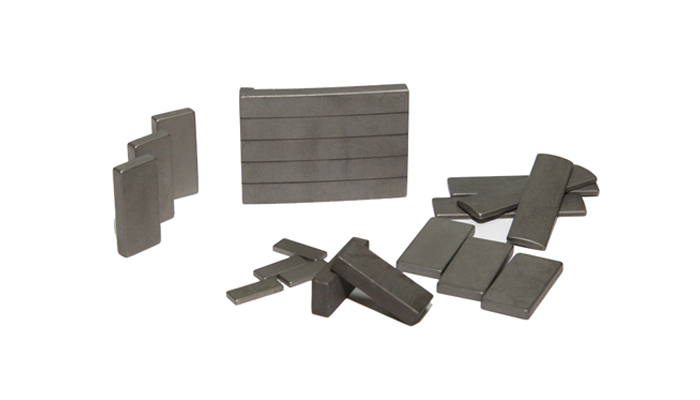
NdFeB passivation is similar to phosphating. It forms a protective film on the surface of the workpiece by chemical methods on the NdFeB surface to achieve the purpose of anti-corrosion of the workpiece.
The advantages and applications of passivation of neodymium magnets;
It is not a coating in itself, but a surface treatment method to increase the corrosion resistance of NdFeB magnets. Passivation magnets have good adhesive properties and are used in many automotive motors with poor corrosion resistance. For phosphating/passivating magnets, the common experiments are 1h salt spray test and 6h salt water immersion, and the operating temperature is less than 240℃.
Process flow of neodymium magnet surface passivation treatment;
The general process of NdFeB passivation is: degreasing→water washing→ultrasonic washing→pickling→water washing→ultrasonic washing→pure water washing→pure water washing→passivation treatment→pure water washing→pure water washing→dehydration→drying.
Degreasing
Degreasing can only remove grease, dust, sweat and attached metal chips on the surface of NdFeB, but cannot remove rust on the magnet. The oil pollution on the NdFeB surface is brought from the processing of the material, such as the anti-rust grease used for anti-rust during storage and transportation, and the cutting fluid that the parts contact during cutting.
NdFeB must clean the surface oil before further surface treatment, otherwise it will affect the surface chemical conversion, electroplating or coating quality. Due to the wide range of sources and types of oil pollution, the degree of pollution varies greatly, so the problem of oil removal is very complicated. In order not to cause corrosion and subsequent residues during the degreasing process, try to use degreasers with low free alkalinity and total alkalinity.
Pickling
The purpose of pickling is to remove the residual black ash and rust on the surface of NdFeB. The pickling solution generally uses 2%~4% nitric acid, and the time is 0.5~2.0 min. High acid concentration and long pickling time are both detrimental to magnets.
passivation
The passivation treatment method is to place the magnet in a container containing passivation liquid, soak or spray it for a period of time, or use the magnet as an anode to electrify, and then passivation can be achieved, that is, a passivation film is formed on its surface. Passivation, as an important surface anti-corrosion treatment method, is widely used in many metals, especially metals such as aluminum, zinc, cadmium, tin and magnesium and their alloys.
In recent years, the corrosion resistance requirements of NdFeB conversion coatings have become higher and higher, and the passivation technology alone has been difficult to meet the requirements. It can effectively improve the corrosion resistance of the composite conversion coating.
Introduction of relevant magnet coatings;
Neodymium magnet coating and plating [ type color thickness ]
Difference between magnet zinc and nickel coating in hardness, life and price
Characteristics and Application of Epoxy Coating Neodymium Magnet
Customers from the United States, the United Kingdom, Australia, Japan, Poland and other customers are looking for ferrite cylindrical magnets. Welcome to contact the Courage magnet manufacturer. Our company is located in Dongguan, China. There are many ready-made sizes and low prices. Like the main picture...
The sample is a small-sized Y35 ferrite magnetic block with a specification of 3 × 1.3 × 4mm, magnetized along the length direction, and a surface magnetic field of about 1300 Gauss....
This is a very small rectangular ferrite block magnet, measuring 2.45 mm in length and 1 mm in both width and height. It is magnetised along its length and is barely noticeable when held in the hand....
7.4x6x5mm Ferrite Small Block Magnet Introduction,Material: Hard Ferrite (Ceramic),Shape: Block / Rectangle / Bar,Coating: No Coating,Grade (Chinese Stardard): Y30,Operating temperature: -40°C to 250°C,Delivery time: 7-15 days,Magnetization direction: thickness....
U-shaped neodymium magnets are a type of high-performance permanent magnet material with a structure resembling the letter ‘U’. Manufactured from sintered neodymium-iron-boron, they are characterised by high magnetic energy product....
This is a radial 4-pole ring (Hollow cylinder) magnet, the material is bonded NdFeB, with high magnetic performance, the size is 16mm outer diameter, inner hole 5mm, height 20mm, surface gray epoxy treatment, suitable for water pump motor...
This product is a 4-pole ring magnet, injection-molded ferrite material, the sample size is 22mm outer diameter, 7mm inner diameter, 4mm thickness, 2 N poles and 2 S poles, mainly used for push rod motors, magnetic induction devices, encoders, etc.,...
This is a radial 2 pole circular magnet designed specifically for magnetic encoder chips. It is made of sintered neodymium-iron-boron with N35 grade performance and is suitable for standard environments....