
0769-23388351
Toggle Navigation

When it comes to heat-resistant magnets, people often encounter some problems or want to know more about them. Today, we have compiled 10 frequently asked questions and answers, which we hope will be helpful to you.
1. What is a heat-resistant magnet?
Heat resistant magnets refer to magnets that can maintain stable magnetic properties in high temperature environments, generally with high Curie temperature and anti demagnetization ability.
2. What type of magnet is a heat resistant magnet?
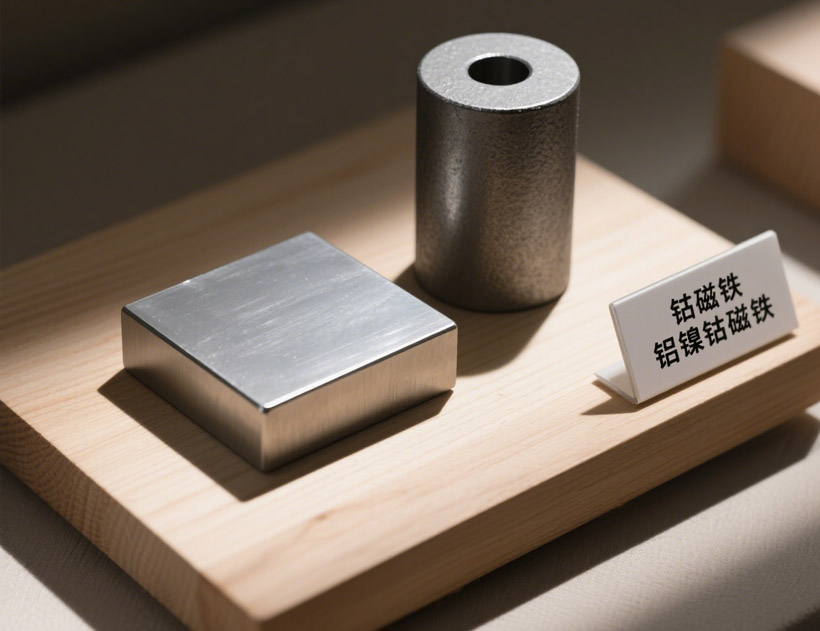
Heat-resistant magnets do not refer to a specific type of magnet, but rather magnets that can function normally in high-temperature environments. They typically refer to samarium-cobalt magnets, aluminum-nickel-cobalt magnets, and high-temperature grade (SH/UH/EH) neodymium magnets.
3. Do heat-resistant magnets' magnetic properties decay at high temperatures? How to avoid it?
All magnets have irreversible losses at high temperatures (e.g. NdFeB may demagnetize above operating temperature), the solution is to choose a higher temperature resistant grade.
4. What is the difference between heat-resistant magnets and ordinary magnets in use?
Heat-resistant magnets are less prone to demagnetization in high-temperature environments and are more stable, while ordinary magnets easily lose their magnetic force in high temperatures and may even become permanently demagnetized.
5. Do heat-resistant magnets require special coatings?
No, they do not. Samarium-cobalt heat-resistant magnets and aluminum-nickel-cobalt magnets are inherently corrosion-resistant and do not require coatings. Neodymium-iron-boron magnets, however, commonly use coatings such as nickel plating, epoxy, gold plating, and Parylene to enhance their heat resistance and corrosion resistance.
6. Why is the price of heat-resistant magnets higher?
The main reason is the composition, for example, samarium cobalt contains rare earth cobalt (price fluctuation), heat-resistant neodymium iron boron need to add expensive heavy rare earth (such as dysprosium).
7. Will heat resistant magnets rust or corrode in a high temperature environment?
Samarium Cobalt and Alnico are highly resistant to oxidation and generally do not corrode. NdFeB material is easy to corrode, need plating protection. If the environment is humid. It is recommended to choose samarium cobalt or do special protection treatment.
8. How does the magnetic strength of different heat resistant magnets compare?
It mainly depends on how many degrees Celsius they are resistant to, if it is around 150 degrees Celsius, NdFeB is the best. If it is over 200 degrees Celsius, Samarium Cobalt is the best. Ferrite is not as good as the first two.
9. How do I mount or secure a heat-resistant magnet?
Generally it is glue or screw fixing, using screw fixing needs to process the screw holes for the heat-resistant magnets.
10. How to choose the right heat-resistant magnet?
When choosing, you should consider the operating temperature range, magnetic force requirements, corrosion resistance requirements, space size restrictions, cost budget, etc.
If you need to buy heat-resistant magnets, special heat-resistant powerful magnets, welcome to let our company provide you with quotations or technical guidance.
Introduction to other heat-resistant magnets;
This is a very small rectangular ferrite block magnet, measuring 2.45 mm in length and 1 mm in both width and height. It is magnetised along its length and is barely noticeable when held in the hand....
7.4x6x5mm Ferrite Small Block Magnet Introduction,Material: Hard Ferrite (Ceramic),Shape: Block / Rectangle / Bar,Coating: No Coating,Grade (Chinese Stardard): Y30,Operating temperature: -40°C to 250°C,Delivery time: 7-15 days,Magnetization direction: thickness....
U-shaped neodymium magnets are a type of high-performance permanent magnet material with a structure resembling the letter ‘U’. Manufactured from sintered neodymium-iron-boron, they are characterised by high magnetic energy product....
This is a radial 4-pole ring (Hollow cylinder) magnet, the material is bonded NdFeB, with high magnetic performance, the size is 16mm outer diameter, inner hole 5mm, height 20mm, surface gray epoxy treatment, suitable for water pump motor...
This product is a 4-pole ring magnet, injection-molded ferrite material, the sample size is 22mm outer diameter, 7mm inner diameter, 4mm thickness, 2 N poles and 2 S poles, mainly used for push rod motors, magnetic induction devices, encoders, etc.,...
This is a radial 2 pole circular magnet designed specifically for magnetic encoder chips. It is made of sintered neodymium-iron-boron with N35 grade performance and is suitable for standard environments....
This product is a multi pole magnetic ring with an inner diameter of 1.5mm. The material is injection molded ferrite. It adopts axial multi pole magnetization and is mainly used for DC motors. If you have a sample of similar injection molded magnetic products, please contact us for quotation....
This is a very small size rectangular block magnet with galvanized surface, 3mm length, 1.5mm width and height, with very fine tolerance, magnetized by lengthwise direction, mainly used in precision electronics, instrumentation, please contact us if you need to buy....