
0769-23388351
Toggle Navigation

A magnet will lose some magnetism immediately when it encounters a high temperature that exceeds its own tolerance. How much high temperature does it need? This depends on the coercive force of the magnet, which is usually expressed by the letter after the magnet grade, such as N40H, the maximum magnetic energy product is 40, and H represents the temperature resistance of 120°C. The higher the coercive force, the more metal dysprosium content is added to the magnet. .
How much magnetism will it lose?
It depends on the degree of its magnetic protection, if there is some iron around it will help. Of course, it depends on the temperature. But this is a highly non-linear effect. It does not lose any magnetism until it reaches a certain temperature, and then loses all magnetism quickly. Please note that the amount of magnetism it loses depends on how high the temperature is, not the length of time at a particular temperature. After the magnet reaches a certain temperature, it will lose all the magnetism that it can reach at that temperature.
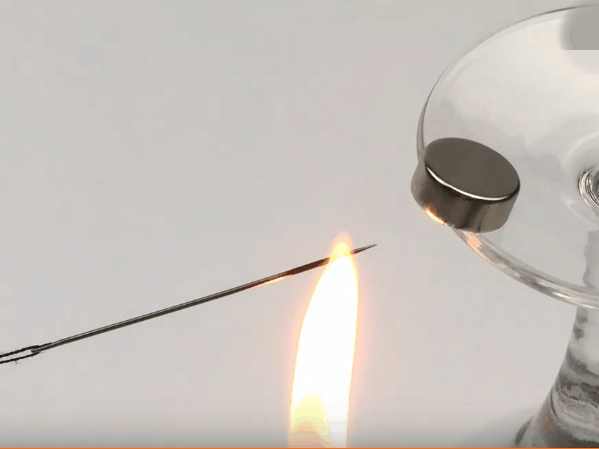
How long does it take?
For a specific small volume of magnet, demagnetization will occur immediately. However, even in a small magnet, it takes time for heat to transfer from the outer surface to the center. For example, a 1 cm3 part takes several minutes. However, the part of the magnet near the surface will immediately lose its performance. 200°, whether in Fahrenheit or Celsius, is very high for a magnet. Unless you have a special, very advanced magnet (UH or AH or better), you will completely ruin it.
Introduction to the coercivity of each grade of magnet;
Grade n neodymium magnet: low coercivity
Grade m neodymium magnet: medium coercivity
Grade H neodymium magnet: high coercivity
SH grade neodymium magnet: extra high coercivity
Uh grade neodymium magnet: ultra high coercivity
EH grade neodymium magnet: extremely high coercivity
Neodymium magnet grade parameters;
Magnetic property parameters of sintered Nd-Fe-B
High temperature resistant magnets are recommended;
Customers from the United States, the United Kingdom, Australia, Japan, Poland and other customers are looking for ferrite cylindrical magnets. Welcome to contact the Courage magnet manufacturer. Our company is located in Dongguan, China. There are many ready-made sizes and low prices. Like the main picture...
The sample is a small-sized Y35 ferrite magnetic block with a specification of 3 × 1.3 × 4mm, magnetized along the length direction, and a surface magnetic field of about 1300 Gauss....
This is a very small rectangular ferrite block magnet, measuring 2.45 mm in length and 1 mm in both width and height. It is magnetised along its length and is barely noticeable when held in the hand....
7.4x6x5mm Ferrite Small Block Magnet Introduction,Material: Hard Ferrite (Ceramic),Shape: Block / Rectangle / Bar,Coating: No Coating,Grade (Chinese Stardard): Y30,Operating temperature: -40°C to 250°C,Delivery time: 7-15 days,Magnetization direction: thickness....
U-shaped neodymium magnets are a type of high-performance permanent magnet material with a structure resembling the letter ‘U’. Manufactured from sintered neodymium-iron-boron, they are characterised by high magnetic energy product....
This is a radial 4-pole ring (Hollow cylinder) magnet, the material is bonded NdFeB, with high magnetic performance, the size is 16mm outer diameter, inner hole 5mm, height 20mm, surface gray epoxy treatment, suitable for water pump motor...
This product is a 4-pole ring magnet, injection-molded ferrite material, the sample size is 22mm outer diameter, 7mm inner diameter, 4mm thickness, 2 N poles and 2 S poles, mainly used for push rod motors, magnetic induction devices, encoders, etc.,...
This is a radial 2 pole circular magnet designed specifically for magnetic encoder chips. It is made of sintered neodymium-iron-boron with N35 grade performance and is suitable for standard environments....